
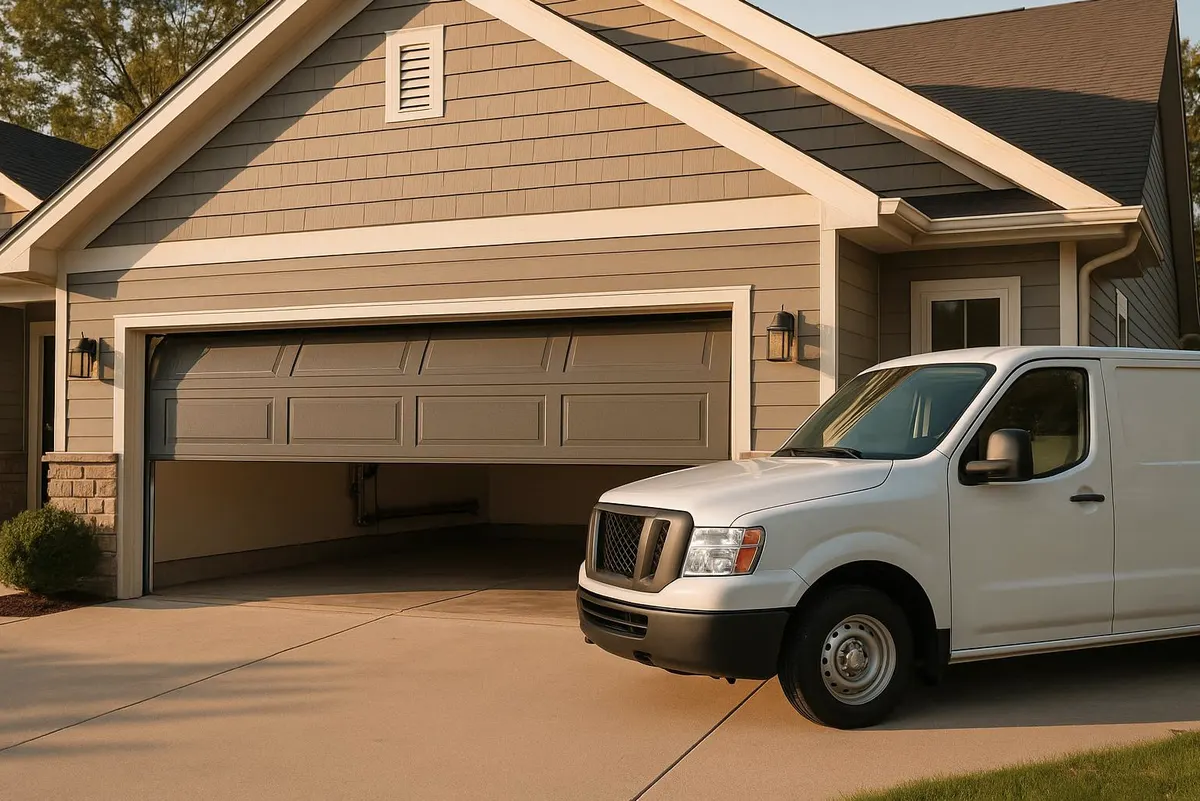
What a Technician Sees on This Call
The call usually starts the same way: "It's just making a weird noise, but it still goes up and down fine." On the service truck, that often means one of two things is happening at the same time. The rollers—the small wheels that guide the door along the track—are chipped, flat on one side, or missing their bearings. And down at the bottom corners of the door, the cables that help lift and control it are starting to fray, with little wire hairs sticking out where the strand rubs against the drum or the bracket. Both problems make noise. Only one of them can send a 150-plus pound door crashing down without warning.
Rollers: The Part That Complains Loudly But Fails Slowly
Garage door rollers ride in the track every time the door opens or closes. Over a few thousand cycles, plastic rollers crack and nylon rollers flatten on one edge, especially if the door gets used several times a day for vehicles, equipment, or foot traffic. In this part of Florida, humidity and the swelling and shrinking of wood door jambs through the wet season can also nudge a track slightly out of alignment, which wears rollers unevenly on one side of the door before the other.
Symptoms of worn rollers:
- A grinding or rumbling sound that gets louder over weeks, not days
- The door hesitates or jerks at the same spot in the track every time
- Visible flat spots, cracks, or wobble when you watch the roller turn
- The opener seems to "strain" at one point in the cycle
Worn rollers are a real problem, but they tend to announce themselves well before they fail completely. You'll usually get weeks of warning noise before a roller actually comes apart or jumps the track.
Cables: The Part That Fails Without Much Warning
The cables run from the bottom brackets of the door up to the drums near the springs, and they carry a huge share of the door's weight and tension whenever the springs are doing their job. A cable doesn't wear flat the way a roller does—it frays strand by strand, often hidden where it wraps around the drum, until one day it simply lets go. When that happens, the door can drop suddenly, tilt to one side, or come off its track entirely, and if anyone is standing underneath or has a hand near the opening, that's a real injury risk, not just an inconvenience.
Signs a cable is close to failing:
- Visible frayed strands near the bottom bracket or around the drum
- The door looks slightly crooked or sits unevenly when closed
- A popping or snapping sound during operation
- Rust or pitting on the cable, especially after a stretch of heavy humidity or storm season
Cables rust and weaken faster here than in drier climates. Afternoon downpours followed by thick humidity mean moisture sits on exposed hardware longer, and salt air closer to the coast speeds up corrosion even more. A cable that looks fine in spring can be noticeably more worn by the time hurricane season winds down in the fall.
So Who's Right in the Argument?
If the disagreement is "can this wait a few weeks" versus "we need someone out here now," the honest answer depends on which part is talking. A noisy roller buys you some time, as long as you're watching it and not ignoring a worsening sound. A frayed cable does not buy you time—it's a countdown, and nobody can tell you exactly how many cycles are left before it lets go. The safe move is to treat any visible fraying, rust pitting, or crooked-sitting door as a today problem, not a someday problem.
What You Can Safely Check Yourself
- With the door closed and the opener unplugged, look at the rollers in the track for cracks, flat spots, or wobble
- Look at the bottom brackets and visible cable sections for fraying, rust, or kinks
- Watch the door move through a full cycle and note any point where it hesitates, jerks, or sounds different than normal
- Check that the door sits level when closed—a lean to one side often points to a cable or spring issue, not just a roller
What you shouldn't do yourself: touch the springs, drums, or cables while they're under tension. That's where most garage door injuries happen, and it's not worth the risk to save a trip charge.
When to Call Cottondale Garage Door Repair
If you're seeing fraying, rust, or a door that sits crooked, that's a job for our Garage Door Cable Repair service—we replace both cables as a pair, check the drums and bottom brackets, and make sure the springs are still balanced correctly before we hand the door back to you. If the main complaint is noise, hesitation, or rollers that look worn but everything else seems fine, our Garage Door Tune-Up & Maintenance visit covers roller replacement, track alignment, and lubrication in one trip, which is also a smart yearly habit given how hard the humidity and storm cycles here are on garage door hardware.
If your door in Cottondale, Marianna, Chipley, or anywhere nearby is making noises you can't quite agree on, give us a call. We'll tell you straight whether it's a roller, a cable, or both, and get it handled before it becomes an emergency.