
The Moment It Starts
You're standing in the garage with your morning coffee, and the door groans on the way up like it's auditioning for a horror movie. Your spouse says, "It's fine, it's only ten years old." You say, "Ten years in this heat is basically ancient." Neither of you actually knows who's right, so the argument moves to the kitchen and nothing gets fixed. Let's settle it with real numbers instead of vibes.
Two Different Clocks: The Door and the Opener
People talk about "the garage door" like it's one machine, but you're really dealing with two separate systems aging at different speeds.
- The door itself (panels, tracks, springs, cables, rollers) typically lasts 20 to 30 years with reasonable care, though individual parts wear out long before the whole door does.
- The opener (the motor unit on the ceiling) usually lasts 10 to 15 years. It's an electro-mechanical device with gears, circuit boards, and a motor — closer in lifespan to a water heater than to the door it's lifting.
So if your opener dies at year 12, that doesn't mean your door is dying too. And if your door starts sagging at year 18, a shiny new opener installed five years ago won't save it.
Springs Don't Follow Either Clock
Torsion and extension springs are rated in cycles, not years, usually somewhere between 10,000 and 20,000 open-and-close cycles. A household that opens the garage door four times a day burns through that in roughly 7 to 10 years. A family with teenagers, a home business, or multiple vehicles can wear springs out much faster. This is the part of the argument people usually forget: how often you use the door matters more than how old the house is.
What Shortens the Lifespan, Realistically
In this part of Florida, a few things chip away at garage door life faster than the manufacturer's spec sheet would suggest:
- Humidity and moisture swings. Wood panels swell and shrink with the seasons, steel panels can develop surface rust at seams and bottom corners, and moisture works into bearings and hinges, accelerating wear.
- Hurricane-season stress. Wind-load events put real force on tracks, panels, and the connection points where the door meets the frame. A door that isn't rated for wind load, or has aging hardware, takes more of a beating during storm season than people realize — even without a direct hit.
- Afternoon downpour cycles. Doors that sit half-wet from daily summer storms and then bake in sun the rest of the day go through more expansion and contraction stress than doors in drier climates.
- Skipped maintenance. Dry hinges, ungreased rollers, and loose hardware don't just make noise — they force the opener's motor to work harder, which shortens its life too.
- Slamming or forcing a stuck door. If the door is binding on the track and someone keeps hitting the button anyway, that's stressing the opener's gears and the door's cables simultaneously.
- DIY spring work gone wrong. Springs under the wrong tension put uneven load on the rest of the system, wearing out cables and rollers faster than normal.
What Actually Extends It
None of this is complicated, but it does need to happen on a schedule rather than "whenever someone notices."
- Annual tune-ups that check spring tension, lubricate rollers and hinges, tighten hardware, and test balance.
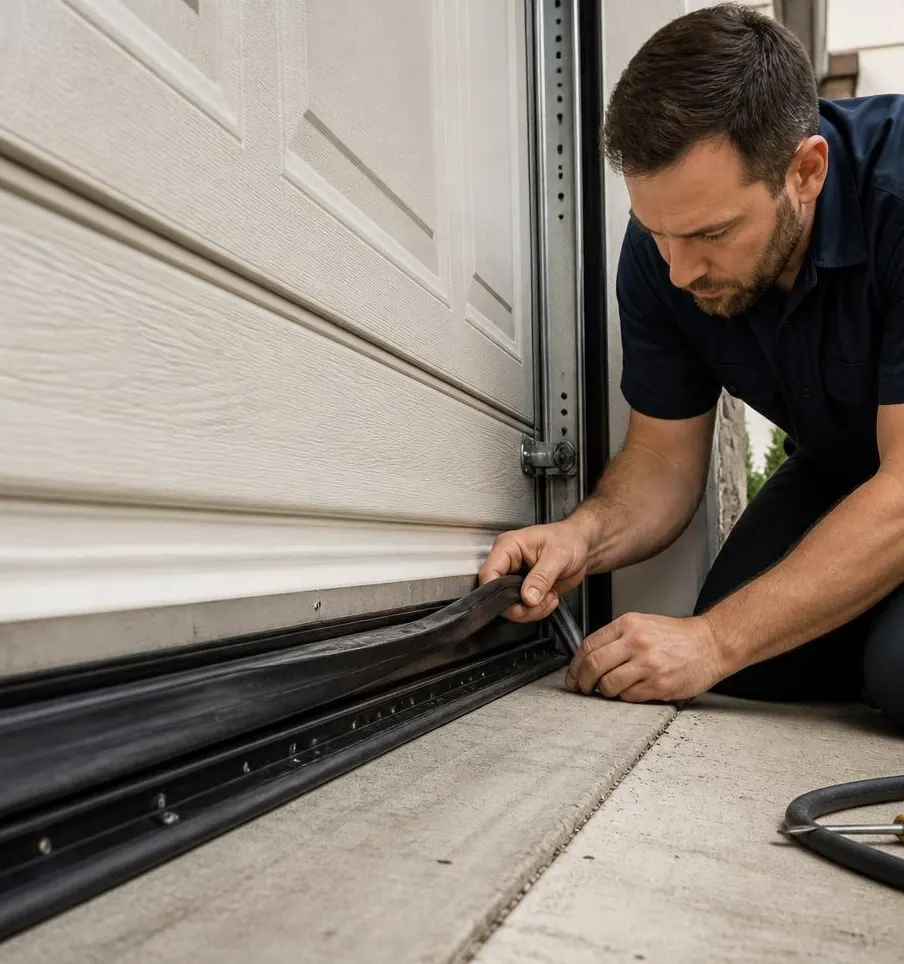
- Keeping weatherstripping in good shape so moisture isn't getting trapped against the bottom panel or into the track.
- Wiping down tracks and hardware after heavy storm stretches, since salt-tinged humid air can speed up surface rust even inland.
- Not ignoring small noises. A squeak today is a $20 lubrication job. A grinding noise ignored for six months is a cable or roller replacement.
- Making sure the door and hardware meet current wind-load expectations if the home is older or the door hasn't been inspected since before recent storm seasons.
Repair or Replace: The Honest Test
Here's a simple way to settle the argument without guessing:
- Is it the opener or the door? If the opener is over 12-15 years old and struggling, replacing just the opener is often the smarter move.
- Is the damage isolated? A single bent panel, a frayed cable, or a tripped spring is a repair, not a reason to replace the whole door.
- Is the door still balanced? Disconnect the opener and lift the door by hand halfway. If it doesn't hold its position, the springs are worn and it's a repair job, not an opener problem.
- Is rust or warping structural? Surface rust on hardware is maintenance. Rust that's eaten through a panel or a track is a replacement conversation.
When to Call Cottondale Garage Door Repair
If you're hearing new noises, the door feels heavier than it used to, or it's been more than a year since anyone looked at the springs and rollers, that's the point to call rather than wait for a full failure. We offer Garage Door Tune-Up & Maintenance to catch wear before it turns into a stuck or sagging door, and if the springs or cables are already showing their age, our Garage Door Spring Repair service gets the door back to safe, balanced operation the same visit in most cases.
If you're in Cottondale, Marianna, Chipley, Graceville, Campbellton, Grand Ridge, Sneads, or Greenwood and want a straight answer on whether your door needs a repair or a replacement, give Cottondale Garage Door Repair a call. We'll settle the argument for you — and get the door working quietly again either way.